Calf Muscle Pain After Workout: Relief and Recovery Time
Explore recovery from calf muscle pain after a workout, including relief options, soreness versus strain, and considerations for returning to exercise.
Yesterday’s workout felt manageable. Today, stairs make you notice every step. Calf muscle pain after workout sessions can be ordinary soreness, but sudden pain, swelling, or difficulty walking needs a different response. Start with when it began and whether it’s improving.
What causes post-workout calf soreness?
Your calf muscle group helps you walk and push off the ground. Searches for “calf leg” anatomy or the “muscle in leg calf” area refer to the back of the lower leg, between knee and ankle. The main muscles are the gastrocnemius and soleus.
Soreness after workout changes often follows unfamiliar demands: more repetitions, different exercises, or returning after a break.
After weight training
Muscle tightness after weight training can follow calf raises or unfamiliar lower-body work. For sore leg muscles after workout days, consider changes in weight, repetitions, and technique.
“Legs sore after gym” describes how you feel, not a diagnosis. Notice whether aching appeared later or one repetition hurt suddenly.
After running and jogging
When considering running calf muscle pain, look at distance, speed, hills, and recent gym sessions. Jogging calf pain still matters at an easy pace; stop if it changes your stride.
Descriptions such as “inner calf pain running” or “calf pain under knee” help locate discomfort, but don’t establish its cause. Nearby tendons and other structures can also hurt.
Is it soreness, a calf strain, or a tear?
Ordinary post-workout soreness
Delayed-onset muscle soreness, or DOMS, can develop after unfamiliar exercise, often becoming noticeable the following day. Muscle soreness after working out may feel like broader aching, tenderness, or stiffness through the muscles you used.
That pattern is a clue, not a diagnostic test. Warming up and feeling better doesn’t rule out injury.
Calf strains and small tears
A calf muscle strain involves overstretched or torn muscle tissue. A small tear affects limited fibres rather than a complete rupture, but is still an injury—not another name for DOMS.
A torn calf muscle may cause sudden pain and difficulty using the leg. Bruising or swelling can occur, but their absence doesn’t exclude a tear in calf tissue.
Get assessed promptly after a sudden snap or pop, significant swelling, worsening pain, or difficulty walking normally. Don’t assign yourself an injury grade from symptoms alone.
What to do next for sore calves
How to get relief from calf soreness
For mild, familiar muscle ache after exercise without injury signs, reduce activities that aggravate it. Comfortable walking may help, but only if you can walk normally without increasing symptoms. Don’t force deep stretches or use pain relief to push through training.
Ask a pharmacist about suitable medicines if needed. For a recent strain, the NHS advises avoiding heat and massage during the first couple of days.
Recovery considerations
Allow room for recovery rather than repeating a demanding calf session. Keep sleep, regular meals, and normal hydration in view; none is an overnight repair or a substitute for assessment.
Note when symptoms began, what changed in training, and whether everyday movement is improving. Muscle pain after workout activity shouldn’t automatically be dismissed as soreness.
You don’t need a complicated recovery routine. Consider what your next activity actually asks of your calf: even standing upper-body exercises involve your legs. Choose comfortable alternatives rather than working around a limp. If you’re unsure whether the discomfort is ordinary soreness, a doctor or physiotherapist can help you decide what comes next.
Seek urgent medical advice for unexplained pain and swelling in one calf, especially with warmth or skin-colour changes. A blood clot is one possible cause. With chest pain or breathlessness, call your local emergency number.
Unusually severe muscle pain, marked weakness, or dark, tea-coloured urine after exercise also needs immediate medical attention. These can indicate rhabdomyolysis, a serious muscle-breakdown condition. Don’t wait for every symptom to appear.
Calf soreness recovery time
Recovery from post-workout soreness
Ordinary soreness generally settles over days. Look for easier walking and stairs, not just temporary relief once you’ve warmed up. Check how you feel afterwards and the following morning.
If symptoms aren’t clearly improving, seek advice. MedlinePlus recommends contacting a healthcare provider for muscle pain lasting more than three days; get help sooner for severe or concerning symptoms.
How strain recovery differs
Calf strain recovery depends on the injury and your intended activity. The NHS says many sprains and strains feel better after around two weeks, while severe injuries can take months. This isn’t a personalised calf injury recovery time.
Wondering how to heal a calf strain fast? Relieving discomfort isn’t the same as restoring readiness for exercise. Follow professional advice for a diagnosed strain rather than using soreness guidance as rehabilitation.
Returning to workouts and running
For ordinary soreness that’s clearly settling, choose a less demanding session. Wait until normal walking is comfortable before considering running. Stop if pain builds, becomes sharp, or changes your movement.
Reduce calf-loading work in the gym. For running, keep the first outing shorter and easier rather than adding distance, speed, and hills together. Notice how your leg feels later, not only whether you finished.
If symptoms repeatedly return as you build back up, get advice. A suspected strain needs assessment and an appropriate recovery plan, not repeated test workouts.
Preventing recurring calf soreness
Gym and weight-training considerations
Warm up and introduce new exercises gradually. Changes in repetitions, resistance, or tempo can all add demand. Keep a simple training record, and account for running or extra walking alongside gym work.
Running and jogging considerations
Build from your current activity level, especially after time off. Change one main training variable at a time where practical, and leave recovery space between demanding sessions. No fixed percentage increase guarantees soreness-free running.
Notice changes in terrain or footwear without assuming there’s one perfect shoe or surface. If discomfort repeatedly follows a particular change, record it. That gives you useful context to discuss rather than another reason to stretch harder.
Start with a manageable next step. Give familiar soreness room to settle, return gradually, and get help when symptoms don’t fit that pattern. Recovery isn’t a test of how much pain you can tolerate.
Medical disclaimer: This article is for educational purposes and does not replace professional medical advice, diagnosis, or treatment.
Further reading
Sources
- MedlinePlus: Muscle aches.
- NHS: Sprains and strains.
- NHS: Deep vein thrombosis.
- CDC: Signs and symptoms of rhabdomyolysis.
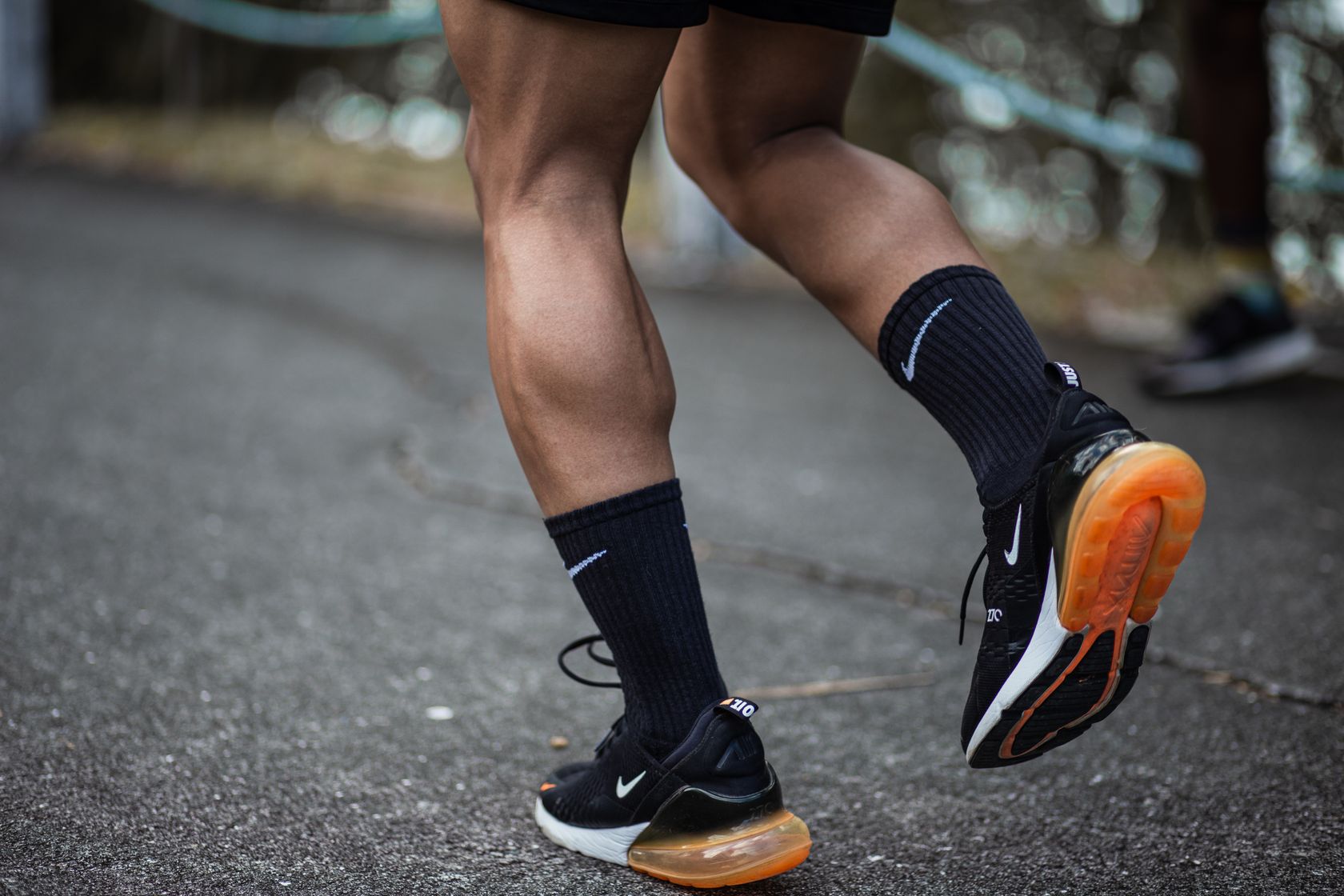
- Lead photograph: Pexels, photo 7462557 — close-up of calves and running shoes; illustrative photography, not a prescribed calf exercise.