Exercises and stretches for knee pain: a practical relief plan
Find gentle stretches and exercises for knee pain, ways to build strength gradually, and options for physical therapy or other treatments for relief.
Knee pain can make ordinary movements—getting up from a chair, walking, or using stairs—feel harder. If you’re looking for exercises for knee pain, a cautious starting point is more useful than trying to push through discomfort. This guide covers gentle knee stretches, simple movements, gradual strengthening, and options for getting support. Knee pain has different causes, so these ideas are general information, not a diagnosis or a personal treatment plan. Choose a calm moment when you can move without rushing, and keep a steady support nearby. If a movement makes your symptoms worse, stop rather than forcing it.
Start with gentle knee stretches
A stretch should feel mild, not sharp or forceful. Move slowly, breathe normally, and don’t bounce. These examples won’t suit every cause of knee pain. If you already know a position irritates your knee, leave it out instead of stretching through discomfort. You don’t need to reach a particular angle for a movement to count.
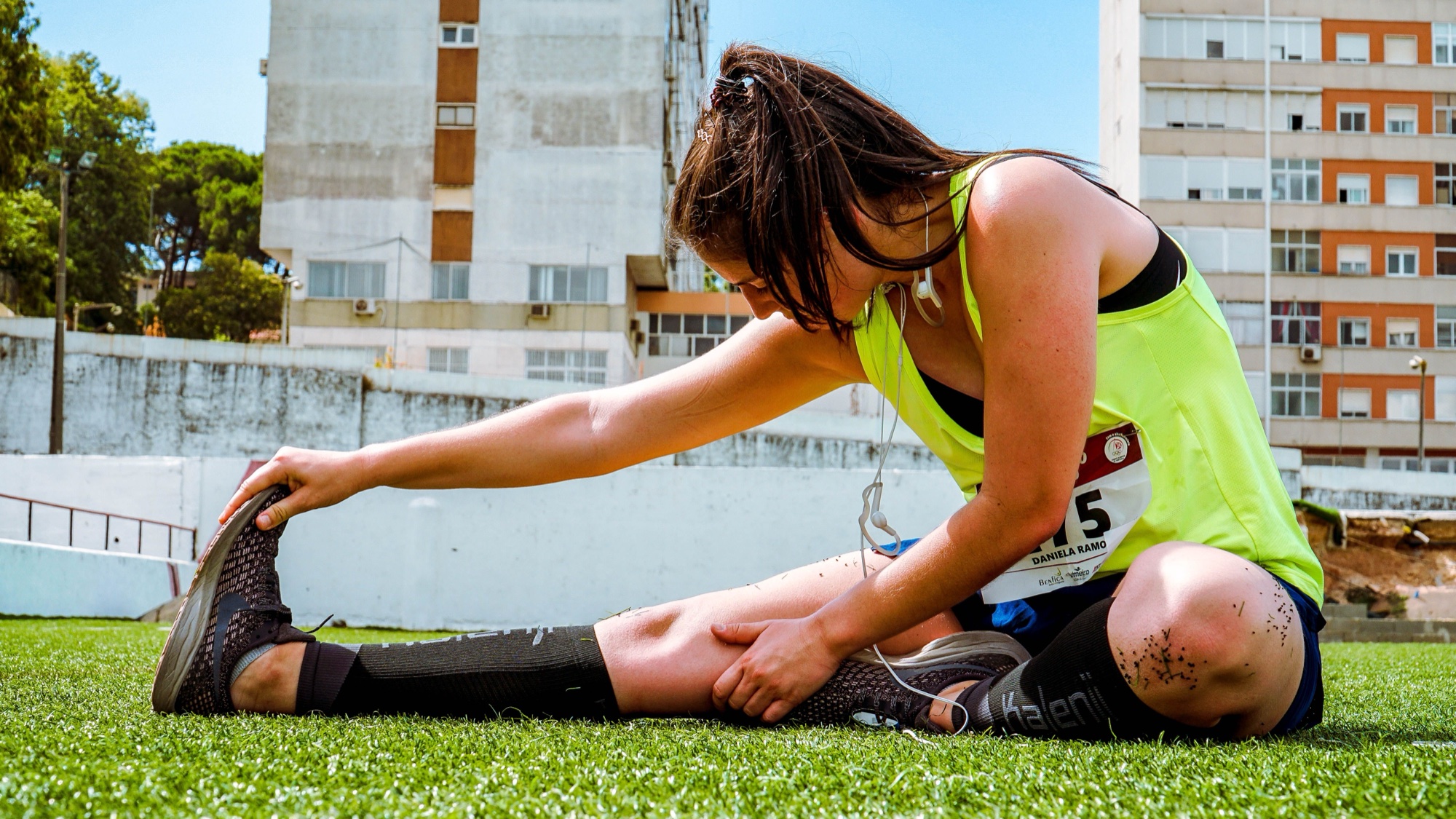
Seated hamstring stretch. The hamstring muscles at the back of your thigh help bend your knee. Sit near the front of a sturdy chair; extend one leg with its heel on the floor. Keeping your back upright, hinge slightly at the hips until you feel a mild stretch behind the thigh. Hold 15–20 seconds; repeat twice per side. Keep the knee soft and stop if it hurts.
Purpose: ease tightness at the back of the thigh while keeping the knee in a comfortable position. Amount: two holds of 15–20 seconds on each side. Cues: lean from the hips; keep the heel supported; use a mild stretch, not a strong pull.
Heel slide. This gentle bending-and-straightening movement lets you practise knee motion without standing. Lie on your back and slowly slide one heel toward you, bending the knee comfortably, then slide it away. Do 8–10 repetitions per side. Keep the movement smooth; don’t pull with your hands. Pause if bending increases pain or swelling.
Purpose: practise comfortable knee bending and straightening. Amount: 8–10 slow repetitions per side. Cues: move the heel along the surface; stay within an easy range; avoid forcing the bend.
Try exercises for knee pain
The phrase knee pain exercises covers many different movements; no single option suits everyone. Start gently, use a stable surface, and don’t rush. Pick a movement you can do with control; a smaller range can be a sensible starting point. These exercises for knees are general examples; ask a qualified professional if unsure they’re appropriate for you.
Thigh-muscle tightening. Sit or lie with the leg supported and straight. Gently tighten the front-thigh muscles, as if pressing the back of your knee toward the support. Hold for 5 seconds, then relax; repeat 8 times. Breathe normally and don’t press hard or lock the joint. This is also called a quad set; “quad” refers to the group of muscles at the front of the thigh.
Purpose: gently practise activating the front-thigh muscles with little knee movement. Amount: 8 holds of about 5 seconds. Cues: keep the leg supported; tighten gently; breathe throughout.
Straight-leg raise. Lie on your back, one knee bent and the other leg straight. Tighten the straight leg’s front thigh, lift it to about the height of the bent knee, then lower slowly. Try 6–8 repetitions per side if comfortable. Don’t arch your back or force the knee straight; stop if pain increases.
Purpose: work the front-thigh muscles while the moving knee stays mostly straight. Amount: 6–8 controlled repetitions per side. Cues: tighten the thigh first; lift only a short distance; lower slowly without letting the back arch.
These exercises for hurt knees are only general starting examples, not a plan for an injury. New swelling, a recent injury, or difficulty bearing weight calls for individual advice. Don’t use an online list to diagnose yourself or delay care.
How to strengthen your knees gradually
To learn how to strengthen knees, build gradually rather than testing your limit. Start with a few controlled repetitions and notice how your knee feels during and afterwards. A short rest between movements is fine; you don’t have to do them all at once. More isn’t automatically better, and soreness isn’t a goal to chase.
Sit to stand. Use a stable chair, feet planted under or just behind your knees. Lean forward from the hips and stand; use your hands for support if needed. Sit slowly. Try 5–8 repetitions, keeping knees aligned generally with your toes. Skip it if standing hurts sharply or feels unsafe.
Purpose: practise using the thigh and hip muscles during a common daily movement. Amount: 5–8 controlled repetitions. Cues: use a stable chair; keep feet planted; lower with control.
Exercises to strengthen knees can be made smaller or shorter, with rests as needed. If comfortable, increase one thing at a time, such as a repetition or the range—not everything together. The exercise to strengthen knees that suits one person may not suit another; a physical therapist can help tailor options. Keep a stable surface nearby, and stop if you feel unsteady.
If you are avoiding knee pain, avoid treating pain as a challenge to overcome. Mild effort in the muscles can be expected during strengthening, but sharp, escalating, or lingering joint pain is a reason to stop and reconsider. If you’re asking “how do i strengthen my knees” after an injury or while symptoms are worsening, get professional guidance before adding more load. General exercises aren’t a substitute for knee rehabilitation exercises physical therapy tailored to a specific injury.
When physical therapy or other treatments may help
Speak with a clinician or physical therapist if pain keeps returning, limits daily activity, or isn’t improving. They can discuss your goals and help choose suitable activity. If you searched “therapy knee injury,” the right approach depends on your situation; this article can’t identify it.
Other knee pain treatments depend on the cause and may include changing activities for a time, guided exercise, or additional care recommended by a health professional. A clinician can help distinguish general soreness from a problem needing a different plan. Don’t start or stop a treatment based only on a general article. Ask a clinician about symptoms that are severe, persistent, or concerning, and seek prompt care for sudden major swelling, a visible change in the knee, or inability to bear weight.
Searching for knee rehabilitation exercises physical therapy can’t confirm a programme suits you. Ask a professional which movements and amounts fit your situation, especially after an injury or procedure.
Begin with a comfortable amount of movement and adjust based on how your knee responds. Small, steady steps are more useful than forcing a painful range. If you’re unsure what is causing the pain, or symptoms persist or worsen, ask a healthcare professional for advice. More focused blogs—including stretching exercises for runner’s knee—are on the way, so stay tuned.
Sources
- NHS: Knee pain.
- Lead photograph: Pexels, photo 2640427 — seated runner stretching outdoors.